





.png)

Exclusive Recruitment Partners
Explore the opportunities from a range of organisations that exclusively partner with Robert Walters for their hiring needs.
Learn more
Work for us
Our people are the difference. Hear stories from our people to learn more about a career at Robert Walters New Zealand
Learn moreOur specialist consultants are experts across a range of disciplines, connecting you with the right talent for your permanent, temporary, contract, or interim jobs. Share your requirements and our experts will get in touch.
Submit a vacancy
Exclusive Recruitment Partners
Explore the opportunities from a range of organisations that exclusively partner with Robert Walters for their hiring needs.
Learn moreOur industry specialists will listen to your aspirations and share your story with New Zealand’s most prestigious organisations. Together, let’s write the next chapter of your career.
See all jobsNew Zealand’s leading employers trust us to deliver talent solutions tailored to their exact requirements.
Browse our range of servicesTalent advisory
Whether you’re seeking to hire talent or seeking a new career move for yourself, we have the latest facts, trends and inspiration you need.
See all resourcesKia ora. For us, recruitment is more than just a job. We understand that behind every opportunity is the chance to make a difference to people’s lives.
Learn more
Work for us
Our people are the difference. Hear stories from our people to learn more about a career at Robert Walters New Zealand
Learn moreTruly global and proudly local, we’ve been serving New Zealand for over 25 years with offices in Auckland, Christchurch and Wellington.
Offices
Our locations

Access the most comprehensive insights into 2026 New Zealand salaries and hiring trends to support mid-year salary and performance review decisions in your industry.
The Robert Walters Salary Guide provides a clear view of New Zealand’s job market in 2026, offering timely insights to support mid-year salary and performance review conversations. As businesses reach the midpoint of the year, organisations are reassessing workforce needs against a backdrop of stabilising economic conditions and more targeted, confidence-led hiring.
Job mobility remains steady, but professionals are making more considered moves, seeking fair pay, meaningful career progression, flexibility, and strong organisational culture. Skills shortages across key sectors continue to shape hiring strategies, placing pressure on employers to compete on more than salary alone. Salary growth in 2026 is expected to be moderate and targeted, focused on in-demand roles as organisations balance retention with budget control.
Offering a comprehensive look into the evolving job markets of Australia and New Zealand, our salary guide provides the insights you need to stay ahead in a rapidly changing workforce landscape. Incorporating feedback from our annual Salary Survey of over 5,500 white-collar professionals spanning more than 12 industries, alongside an in-depth analysis of over 100,000 advertised roles across the region, this year’s guide provides a forward-looking perspective on the trends shaping 2026. It also features detailed salary ranges and actionable insights tailored to meet your needs.
Enter your details below to access the 2026 Salary Guide and salary benchmarking tool.

The Robert Walters salary benchmarking tool offers quick access to the latest salary data and hiring trends across 31+ countries. Using insights from over 100,000 roles advertised in Australia and New Zealand, it provides salary ranges and averages for hundreds of positions across key industries.
This digital tool is designed to give hiring managers and job seekers a clear, up-to-date view of the job market. Whether you're benchmarking salaries or exploring your earning potential, the Salary Benchmarking Tool delivers the data you need, all in one place.
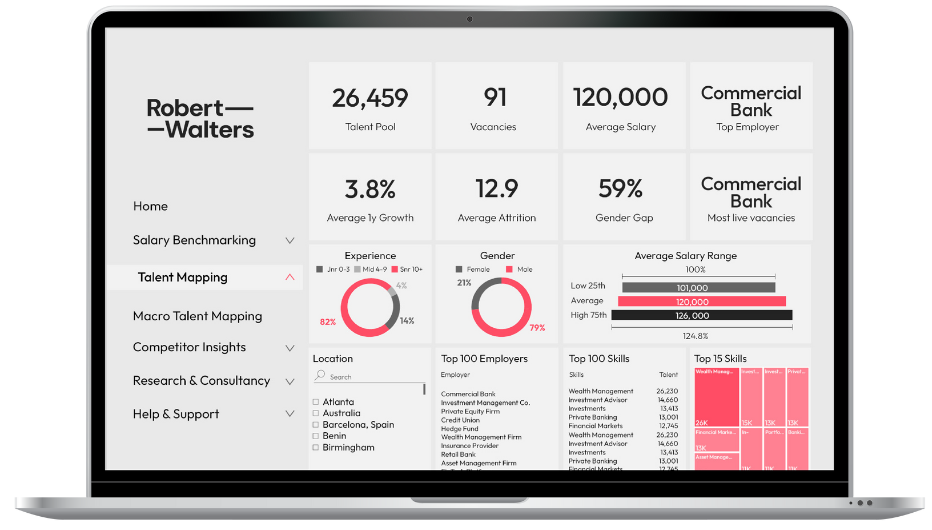
Use the 2026 Salary Guide for a comprehensive understanding of market trends, salary ranges, and workforce priorities across industries. It’s ideal for strategic planning, such as preparing for salary negotiations or understanding broader hiring trends.
The Salary Benchmarking Tool is best suited for quick, specific insights into salary ranges and averages by role, sector, or location. Use it when you need actionable data to compare your salary, personal career planning inform hiring decisions or performance reviews.
During performance reviews, employers should combine performance evaluations with market insights. Use the salary benchmarking tool to:
- Compare employee pay to market averages and industry standards.
- Address potential pay gaps to retain top talent.
- Align compensation packages with workforce priorities such as flexibility and career progression. This approach ensures fair, competitive pay structures that motivate and retain employees.
Confidence that salary growth is keeping pace with inflation remains low. In Canterbury, just 16.5% of respondents believe their pay is keeping up with living costs. This compares with 17.1% in Auckland and Wellington with the highest at 21.4%.
Salary growth in 2026 is forecast to be moderate and highly targeted, with increases concentrated in in-demand roles.